
Golden Retrievers have one of the most beautiful coats in the dog world, but that golden shine comes with regular maintenance.
Their medium-length, water-repellent double coat has a dense undercoat and a longer outer coat that protects the skin from weather, moisture, and outdoor debris. They shed throughout the year, with heavier shedding during seasonal coat changes.
At Pawparazzi, we see this first-hand during grooming sessions. A Golden Retriever may arrive looking relatively tidy, yet once we start brushing, the amount of loose undercoat can be surprising. The key is not trying to stop shedding. It is keeping the coat clean, loose hair controlled, skin healthy, and grooming comfortable.
Understanding the Golden Retriever Coat
The Golden Retriever’s coat has two functional layers. The soft undercoat provides insulation, while the longer guard hairs form the outer layer. This structure helps regulate body temperature and protects the dog during outdoor activities.
Because the coat is dense, loose undercoat can remain trapped beneath the top layer. Regular brushing removes dead hair before it accumulates around the house or forms tangles. Feathering around the ears, chest, legs, tail, and belly needs particular attention because these areas can collect dirt and develop knots.
One mistake we often see is treating the Golden like a dog that needs a haircut to stay cool. Do not shave a Golden Retriever’s double coat unless a veterinarian recommends it for a medical reason. Removing the protective outer coat can expose the skin to sun damage and interfere with its natural insulating function.
How to Manage Golden Retriever Shedding
Shedding is normal for this breed. Golden Retrievers typically shed moderately throughout the year and can shed much more heavily during seasonal changes. During these periods, increasing brushing frequency makes a noticeable difference.
For routine maintenance, brush your Golden around once or twice a week. During heavy shedding, daily brushing may be useful. A pin brush can reach through the dense coat and loosen dead undercoat, while a metal comb works well around feathered areas and helps identify smaller tangles.
I recommend working systematically rather than repeatedly brushing the same visible areas. Start around the neck and shoulders, move across the body, then pay attention to the legs, tail, chest, and areas behind the ears. Gentle brushing protects the skin and makes grooming a much more positive experience.
A sudden change in shedding deserves more attention. Bald patches, thinning fur, redness, persistent itching, sores, or inflamed skin can indicate allergies, parasites, or another health problem. In these situations, grooming should not replace veterinary evaluation.
Bathing and Golden Retriever Spa Care
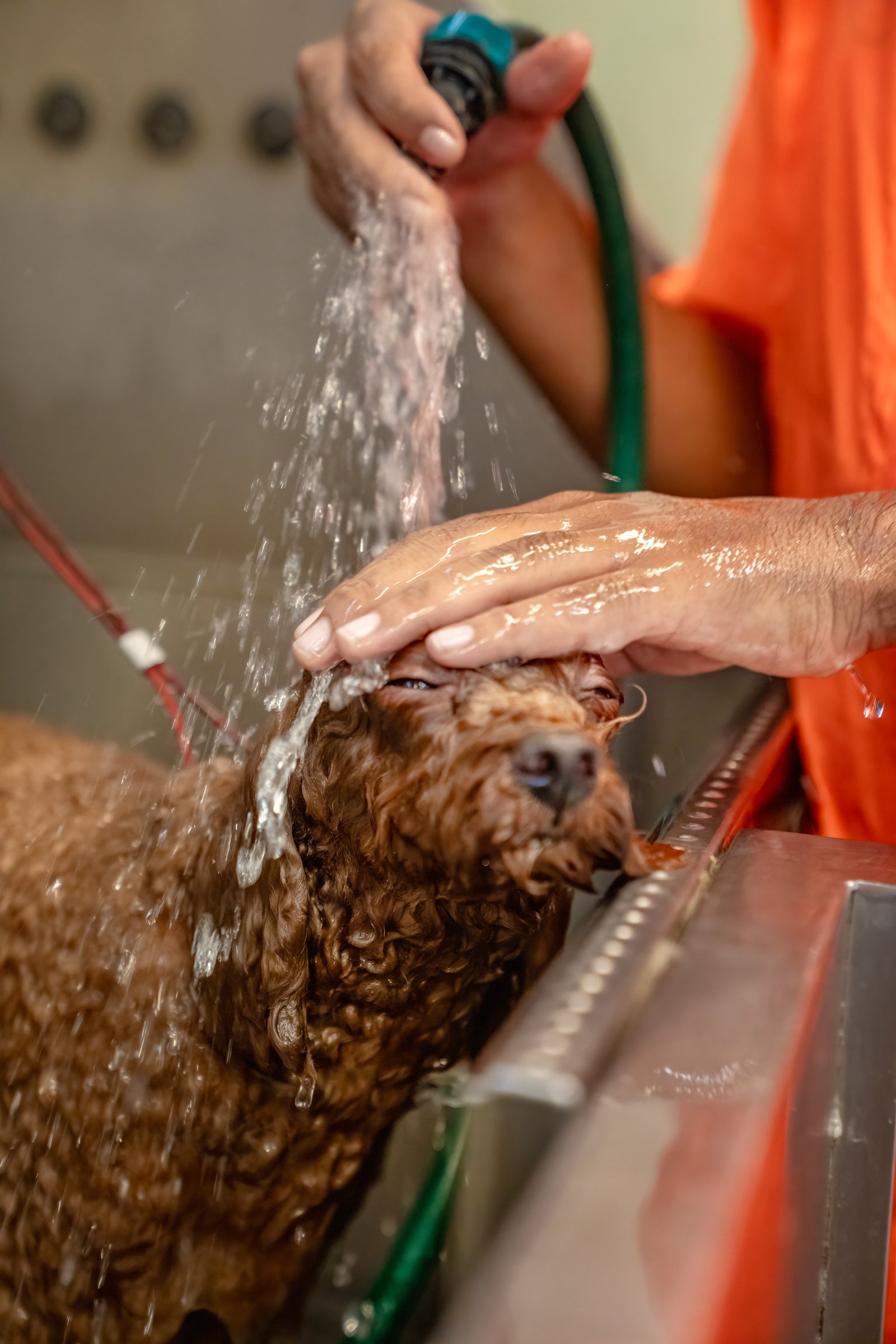
Golden Retrievers do not need frequent bathing simply because they shed. Over-bathing can remove natural oils and leave the skin and coat dry. Instead, consider your dog’s lifestyle, coat condition, outdoor activity, swimming habits, and visible dirt when deciding when a bath is appropriate. (American Kennel Club)
Before the bath, brush the coat thoroughly. Removing loose hair and debris first makes washing easier and reduces the chance of tangles becoming tighter when wet.
Use a dog-specific shampoo rather than human shampoo because canine skin has different requirements. A thick double coat also needs thorough rinsing because shampoo can remain trapped close to the skin. After bathing, towel drying followed by careful drying with appropriate cool air helps prevent prolonged dampness in the dense undercoat.
At Pawparazzi, we treat spa grooming as more than making a Golden Retriever look fluffy. A proper session gives us an opportunity to inspect the skin, coat, ears, paws, nails, and other areas that owners may not notice during everyday handling.
Don’t Forget Ears, Paws, and Nails
Golden Retrievers have floppy, coated ears, so regular checks are important. Look for unusual odor, excessive wax, moisture, redness, or discharge. Dogs that swim may need more frequent ear checks because moisture can remain inside the ear canal. If you notice signs of infection, consult your veterinarian rather than repeatedly cleaning the ear at home.
Paw care matters too. Check between the toes for grass seeds, burrs, mud, and accumulated hair. Keep nails at a comfortable length because overgrown nails can affect normal movement and may split or snag.
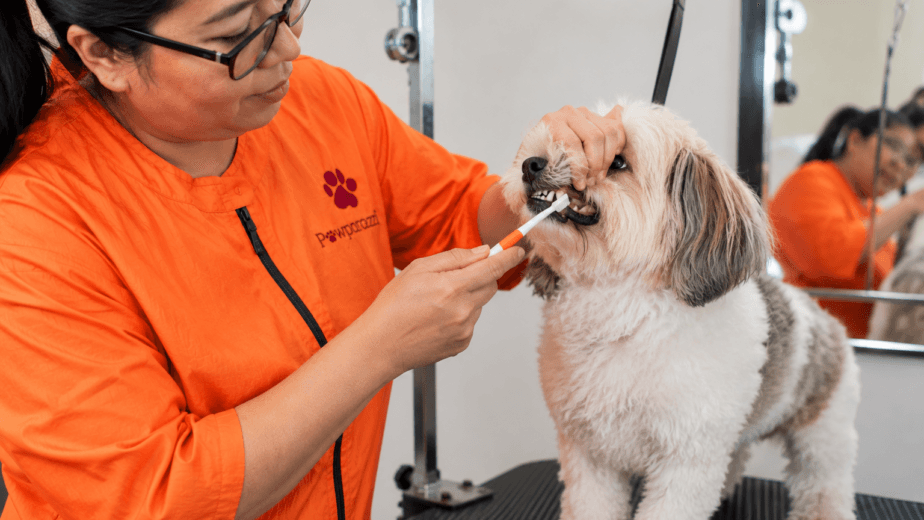
Dental hygiene also belongs in a complete grooming routine. Regular tooth brushing with canine toothpaste helps support oral hygiene and should become a familiar part of your dog’s routine.
Golden Retriever Grooming Routine That Works
A practical routine does not need to be complicated:
- Daily: Check the coat after outdoor walks and remove visible debris.
- Several times weekly: Brush through the double coat, especially feathered areas.
- During heavy shedding: Increase brushing frequency as needed.
- Regularly: Check ears, paws, nails, teeth, and skin.
- When dirty or necessary: Give a thorough bath using dog-safe products.
- Every 4 to 6 weeks: Consider professional grooming for coat maintenance, nail care, paw trimming, and a deeper clean, depending on your dog’s needs.
The best grooming routine is one your Golden Retriever can comfortably maintain. Start slowly, reward calm behavior, and make handling the ears, paws, mouth, and tail part of everyday life. Puppies especially benefit from positive grooming experiences because early exposure can make future brushing, bathing, nail trimming, and professional spa visits much easier.
A well-groomed Golden Retriever does not simply have a cleaner, shinier coat. Regular grooming helps you notice changes early, manage loose fur, prevent avoidable tangles, and keep your dog comfortable. From our experience at Pawparazzi, consistency always works better than waiting until the coat becomes heavily tangled or the shedding becomes overwhelming.