A Shih Tzu may look like a low-maintenance lapdog, but that beautiful flowing coat needs consistent care.
At Pawparazzi, we have groomed enough Shih Tzus to learn that the biggest difference between an easy grooming session and a stressful one usually comes down to routine.
A few minutes of coat care each day can prevent painful mats, dirty facial hair, irritated skin, and difficult grooming appointments.
Understanding the Shih Tzu Coat
Shih Tzus have a long double coat with a silky outer layer and a softer, denser undercoat. Coat texture varies from dog to dog.
Some have fine, straight hair, while others have thicker or softer coats that tangle quickly. Many also experience a noticeable coat change around 10 to 12 months as the adult coat develops.
This difference matters when choosing a grooming routine. A long show coat needs considerably more maintenance than a short puppy cut. The goal is not simply to make the coat look fluffy.
Proper grooming keeps the hair manageable while allowing you to check the skin, paws, ears, eyes, and other areas that can easily hide problems.
How Often Should You Groom a Shih Tzu?
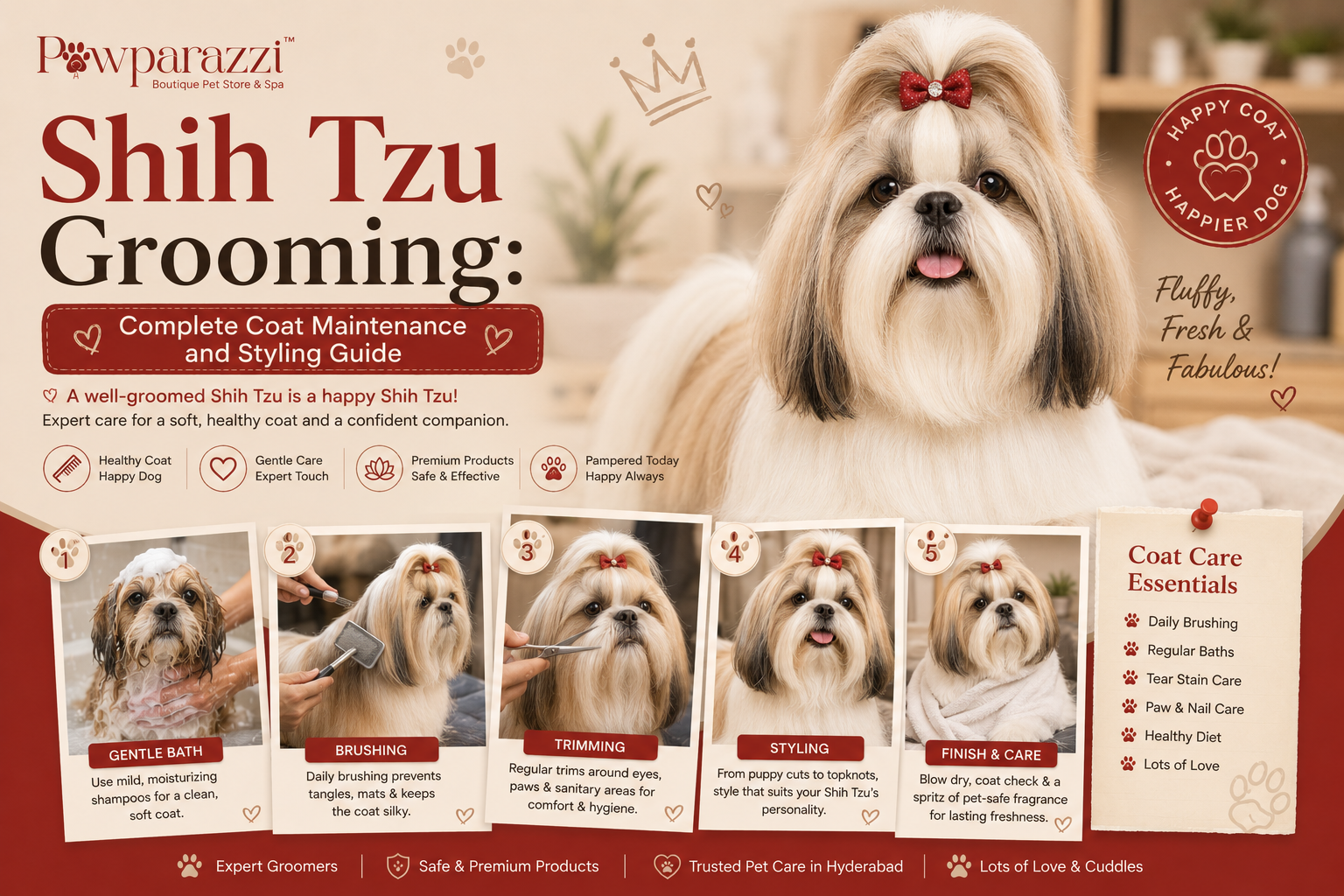
For a long-coated Shih Tzu, daily brushing is the safest routine. A shorter trim can reduce the workload, but regular brushing remains important because hair around the legs, belly, ears, armpits, tail, and collar area can knot quickly.
At Pawparazzi, we often tell pet parents that consistency matters more than marathon grooming sessions. Five to ten calm minutes of brushing is usually easier for both owner and dog than waiting until the coat becomes tangled.
Brushing Technique That Actually Works
Start with a soft slicker brush and work in small sections. Lift the hair so you can reach through the coat instead of brushing only the surface. Follow with a metal comb to check whether the brush reached the skin.
Pay special attention to the ears, armpits, chest, belly, back legs, and tail. These friction-prone areas commonly develop mats. Never pull aggressively through a knot.
If a mat sits close to the skin or covers a large area, professional removal is safer than repeatedly tugging at it.
Bathing and Drying a Shih Tzu
Bathing frequency depends on coat length, lifestyle, skin condition, and how quickly the dog becomes dirty. Many long-coated Shih Tzus benefit from bathing roughly every three to four weeks, while some dogs may need a different schedule.
Use a shampoo formulated specifically for dogs rather than human shampoo. Thorough rinsing is essential because leftover product can irritate the skin. After bathing, dry the coat completely. Damp hair can encourage tangling, especially in a dense coat.
One grooming mistake we see often is bathing a heavily matted dog before removing the mats. Water can tighten existing tangles and make them harder to remove. Brush and assess the coat first.
Face, Eyes, and Topknot Care
The Shih Tzu’s facial hair deserves daily attention. Their short muzzle and prominent eyes make the area around the face particularly important to maintain. Gently clean normal eye discharge with a soft, damp cloth and keep facial hair from rubbing against the eyes.
A topknot can hold forehead hair away from the eyes, while some pet parents prefer a shorter facial trim. The mustache and topknot should be combed regularly to prevent tangles.
If you notice excessive tearing, redness, swelling, squinting, an unpleasant odor, or unusual discharge, grooming should not replace veterinary care.
Choosing the Right Shih Tzu Haircut
There is no single best Shih Tzu haircut. The right style depends on coat texture, lifestyle, grooming commitment, and the dog’s comfort.
A puppy cut keeps the coat short and practical. It works particularly well for active households or owners who cannot manage daily long-coat maintenance. Professional grooming is commonly needed every four to six weeks to maintain the shape.
A long coat or show-style trim creates the classic flowing Shih Tzu appearance but demands much more brushing and combing.
A short face and body trim can also make facial cleaning, outdoor activities, and everyday maintenance easier. At Pawparazzi, we prefer choosing a style around the dog’s lifestyle rather than chasing a particular look.
Don’t Forget Paws, Nails, Ears, and Sanitary Areas
Complete grooming goes beyond the body coat. Trim excess hair around the paw pads when necessary, keep nails at a comfortable length, and check the ears during regular grooming.
Paw hair can collect dirt and moisture, while overgrown nails can affect comfortable movement.
Sanitary trimming around the rear and belly can also improve cleanliness, particularly for dogs with longer coats.
Should You Shave a Shih Tzu?
A short haircut and a close shave are not the same thing. Shaving should not be treated as a routine summer cooling method.
Coat removal does not replace proper heat management, and severely neglected mats may require clipping because they can prevent the skin from drying properly.
For most Shih Tzus, regular brushing, bathing, drying, and sensible trimming provide a better approach.
Our Pawparazzi Approach to Shih Tzu Grooming
After working with Shih Tzus, one lesson stands out: grooming should feel like routine care, not an occasional rescue mission.
Start handling puppies early, introduce brushing gradually, reward calm behavior, and keep sessions positive. Early grooming experiences can make future brushing, nail care, bathing, and professional appointments much easier.
The healthiest Shih Tzu grooming routine combines coat maintenance with observation. When you brush regularly, you get an opportunity to notice dry skin, redness, unusual lumps, parasites, ear changes, or areas that suddenly become sensitive.
That simple habit can make grooming useful for more than keeping your Shih Tzu looking beautiful.