
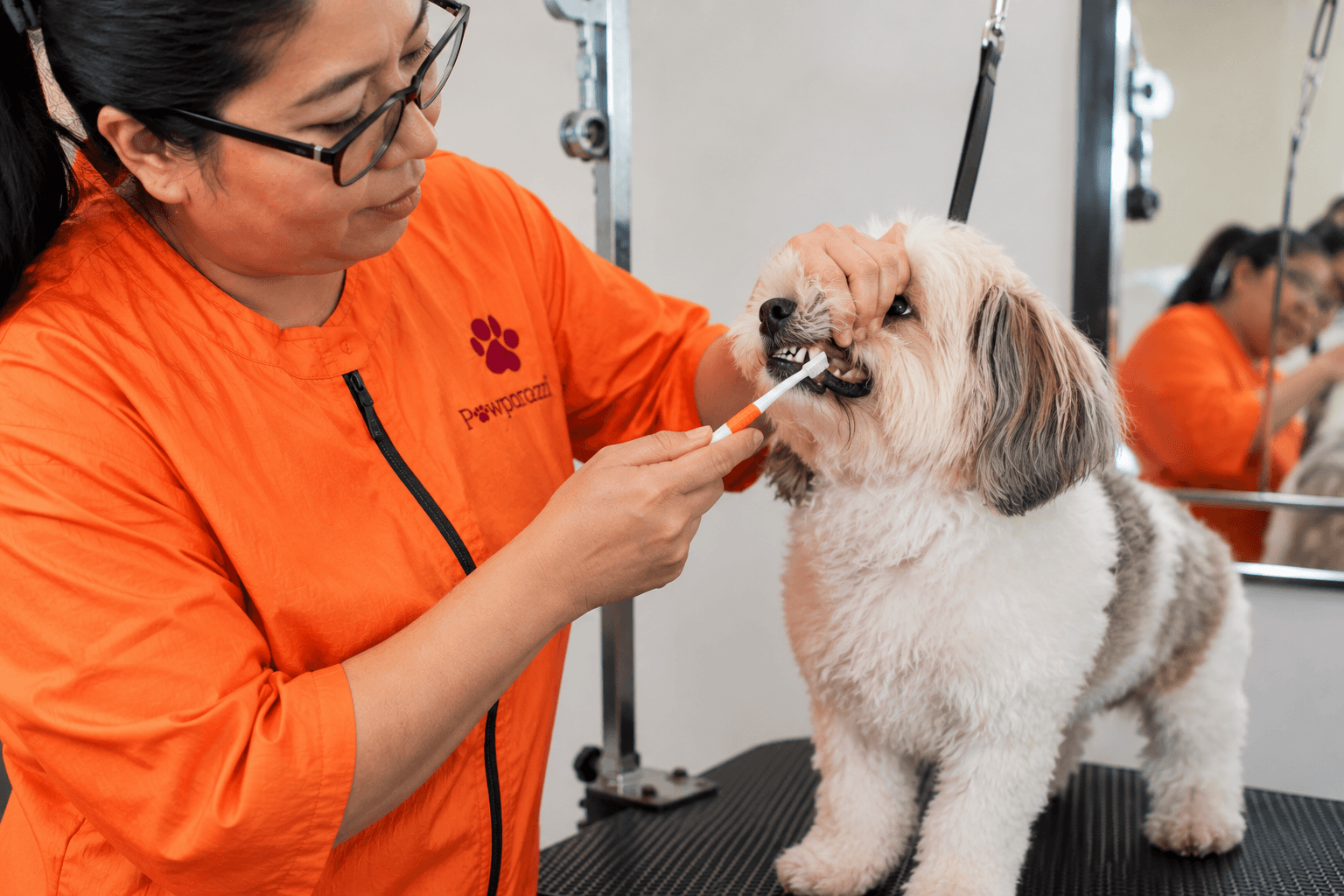
Most dog owners focus on bathing, coat trimming, nail clipping, and ear cleaning during grooming sessions. Dental care often gets ignored until bad breath, swollen gums, or difficulty eating becomes obvious.
At Pawparrazzi Boutique Pet Store & Spa, we have seen many dogs with healthy coats but poor oral hygiene. In several cases, plaque buildup and gum disease were already affecting their appetite, mood, and overall health.
After working closely with pet parents in Hyderabad, one thing became clear. Teeth brushing should not be treated as a separate task.
It should become a regular part of dog grooming. Consistent oral care helps prevent dental disease, reduces bacteria in the mouth, and improves a dog’s quality of life.
Why Dental Health Matters in Dogs?
A dog’s mouth contains bacteria just like a human mouth. When food particles and saliva combine, they form plaque on the teeth. If plaque is not removed, it hardens into tartar. This rough yellow or brown layer sticks near the gum line and creates an ideal environment for bacterial growth.
Over time, this can lead to periodontal disease, gingivitis, inflamed gums, tooth decay, and tooth loss. In advanced cases, oral bacteria may even enter the bloodstream and affect organs such as the heart, liver, and kidneys.
Many pet owners assume bad breath is normal in dogs. In reality, persistent foul breath is often one of the earliest signs of dental problems.
At Pawparrazzi, we once groomed a Labrador whose owner only complained about “dog smell.” During the grooming session, we noticed severe tartar buildup and red gums. After a veterinary dental cleaning and regular brushing routine, the dog became more active and started eating comfortably again.
Common Signs of Poor Oral Hygiene
Dental issues usually develop slowly. Dogs also tend to hide pain well, which makes regular inspection important.
Some common signs include:
- Bad breath
- Yellow or brown tartar on teeth
- Red or bleeding gums
- Excessive drooling
- Difficulty chewing dry food
- Pawing at the mouth
- Loose teeth
- Reduced appetite
Small breeds such as Shih Tzus, Pomeranians, Yorkshire Terriers, and Toy Poodles are especially prone to dental disease because their teeth are crowded in a smaller jaw structure.
Why Teeth Brushing Should Be Part of Grooming?
Grooming is all about hygiene, comfort, and preventive care. Oral hygiene naturally fits into that routine.
When brushing becomes part of regular grooming, pet parents are more likely to stay consistent. A dog that already tolerates bathing, brushing, and handling usually adapts better to toothbrushing sessions as well.
At Pawparrazzi, we encourage pet parents to think of grooming as full-body wellness care. Clean fur alone does not mean a healthy dog. Healthy gums, clean teeth, and fresh breath matter equally.
Including dental care in grooming offers several benefits:
Reduces Plaque and Tartar Buildup
Daily or frequent brushing removes soft plaque before it hardens into tartar. Once tartar forms, professional scaling is usually required.
Prevents Gum Disease
Brushing reduces bacteria around the gum line. Healthy gums support stronger teeth and reduce inflammation.
Improves Breath Odor
Most bad breath in dogs comes from bacterial buildup inside the mouth. Regular brushing noticeably improves breath freshness.
Helps Detect Early Problems
During brushing, pet parents can spot broken teeth, swollen gums, mouth ulcers, or unusual growths early.
Makes Professional Cleanings Easier
Dogs with consistent oral care often need fewer intensive dental procedures under anesthesia.
How to Brush a Dog’s Teeth Properly?
Many owners avoid brushing because they think dogs will resist. The truth is that gradual training works surprisingly well.
Start slowly and make the experience positive.
Use Dog-Safe Dental Products
Never use human toothpaste. Ingredients like xylitol and fluoride can be toxic to dogs.
Choose:
- Dog toothpaste with poultry, peanut butter, or malt flavor
- Soft-bristled dog toothbrush
- Finger brush for beginners
- Veterinary-approved dental gel
Introduce the Toothpaste First
Allow your dog to lick a small amount from your finger. This helps build familiarity and trust.
Start with Short Sessions
Lift the lips gently and brush the outer surfaces of the teeth in circular motions. Focus on the back molars because plaque accumulates heavily there.
Even 30 to 60 seconds per session can make a difference initially.
Reward Calm Behavior
Use praise, treats, or playtime after brushing. Positive reinforcement helps dogs associate dental care with something enjoyable.
How Often Should You Brush Your Dog’s Teeth?
Daily brushing is ideal. However, even brushing three to four times a week significantly reduces plaque accumulation.
At Pawparrazzi, we often tell busy pet parents to connect toothbrushing with existing grooming habits. For example:
- Brush teeth after evening walks
- Pair brushing with weekly baths
- Add oral checks during coat brushing sessions
Routine matters more than perfection.
Dental Chews and Water Additives Are Helpful but Not Enough
Many products claim to clean dog teeth automatically. Dental chews, water additives, and chew toys can support oral hygiene, but they do not replace brushing.
Chewing may help scrape some plaque from tooth surfaces, especially on molars. Still, bacteria near the gum line often remain untouched.
The Veterinary Oral Health Council recommends combining mechanical cleaning methods like brushing with supportive dental products for better oral health management.
Professional Dental Cleaning vs Home Dental Care
Professional veterinary dental cleaning is important, especially for dogs with heavy tartar or advanced gum disease. During these procedures, veterinarians clean below the gum line, where toothbrushes cannot reach.
Still, professional cleaning alone is not enough.
Without home care, plaque begins returning within days. This is similar to humans getting teeth cleaned at the dentist but never brushing afterward.
The best approach combines:
- Regular home brushing
- Dental-friendly diet support
- Routine grooming inspections
- Professional veterinary dental checkups
Puppies Should Learn Dental Care Early
Puppyhood is the easiest stage for introducing oral hygiene. Young dogs adapt quickly to handling and grooming routines.
Start by touching the muzzle, lifting lips gently, and rewarding calm behavior. Once the puppy becomes comfortable, introduce the toothbrush gradually.
Dogs trained early usually become much easier to groom and examine throughout adulthood.
Senior Dogs Need Even More Dental Attention
Older dogs often develop tartar buildup, gum recession, and worn teeth. Dental pain in senior pets frequently goes unnoticed because symptoms appear subtle.
Some aging dogs become less playful or stop eating crunchy food simply because chewing hurts.
At Pawparrazzi, we often notice that senior dogs become more energetic after proper dental cleaning and oral care routines. Better oral comfort can improve eating habits, mood, and daily activity.
Final Thoughts
Dental care is not an optional luxury for dogs. It is a core part of preventive pet wellness. Ignoring oral hygiene can lead to painful infections, expensive treatments, and long-term health complications.
From our experience at Pawparrazzi Boutique Pet Store & Spa, dogs that receive regular toothbrushing as part of grooming often stay healthier, smell fresher, and experience fewer dental issues over time.
A shiny coat may look impressive, but healthy teeth and gums are just as important. Adding a simple brushing routine to grooming sessions can protect your dog’s health for years to come.